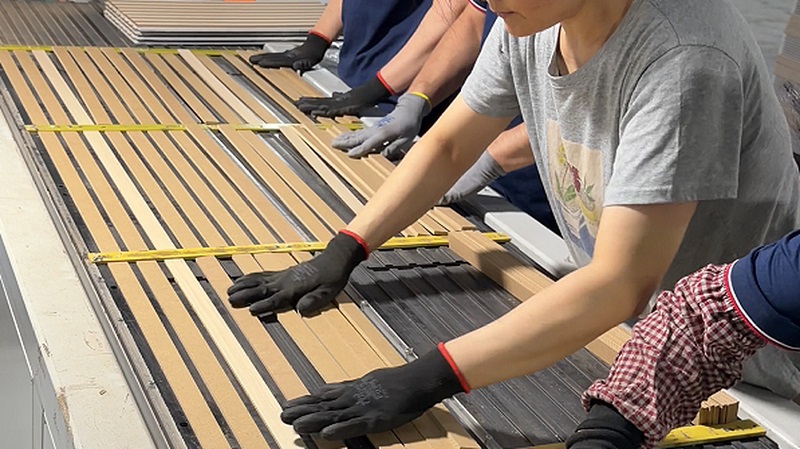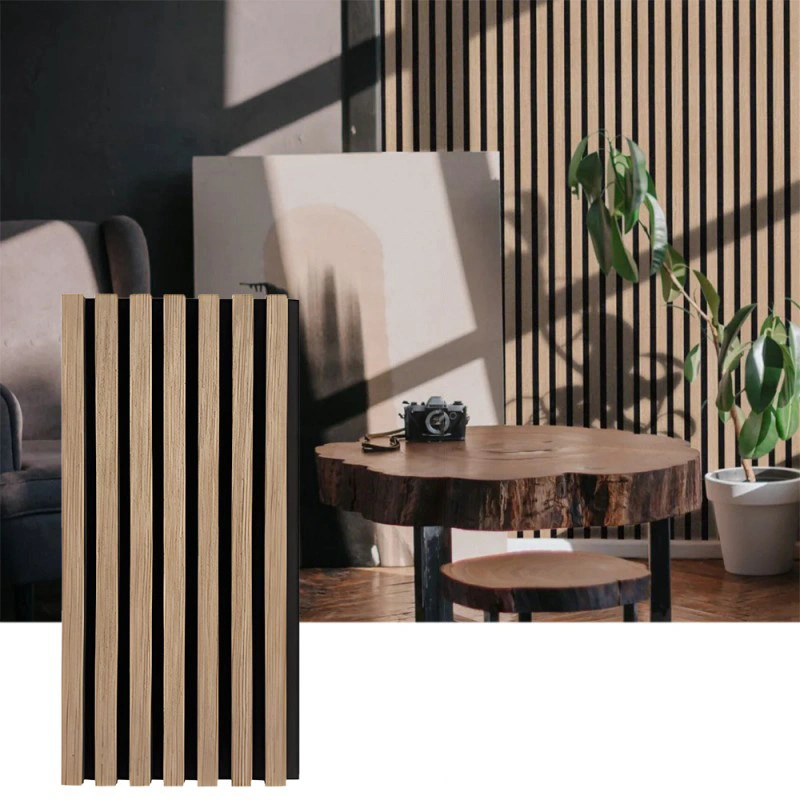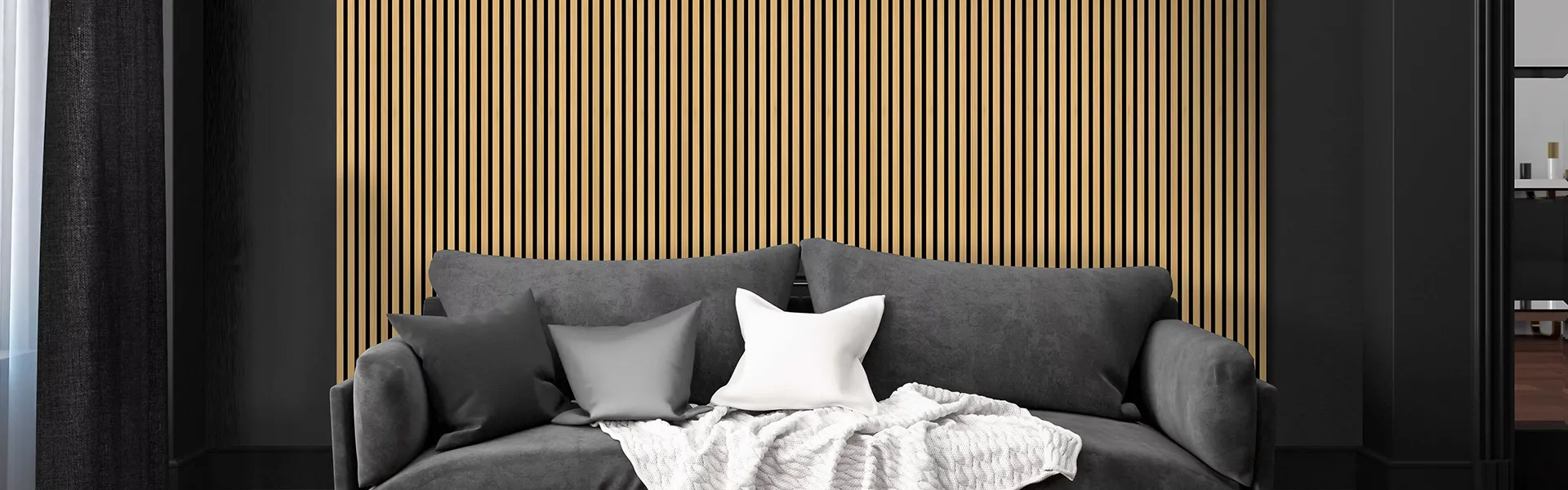
Linear Wood Slat PET Acoustic Wall Panel systems combine the natural appearance of wood-inspired finishes with the sound-absorbing properties of polyester fiber backing. Designed for contemporary residential and commercial interiors, these panels help manage echo, improve speech comfort, and create visually appealing feature walls. Understanding their construction, acoustic performance, installation requirements, and customization options helps architects, contractors, distributors, and property owners select a solution that suits their projects. This guide explains how these panels work, where they perform best, and what buyers should evaluate before placing an order.
1. What Are Linear Wood Slat PET Acoustic Wall Panels?
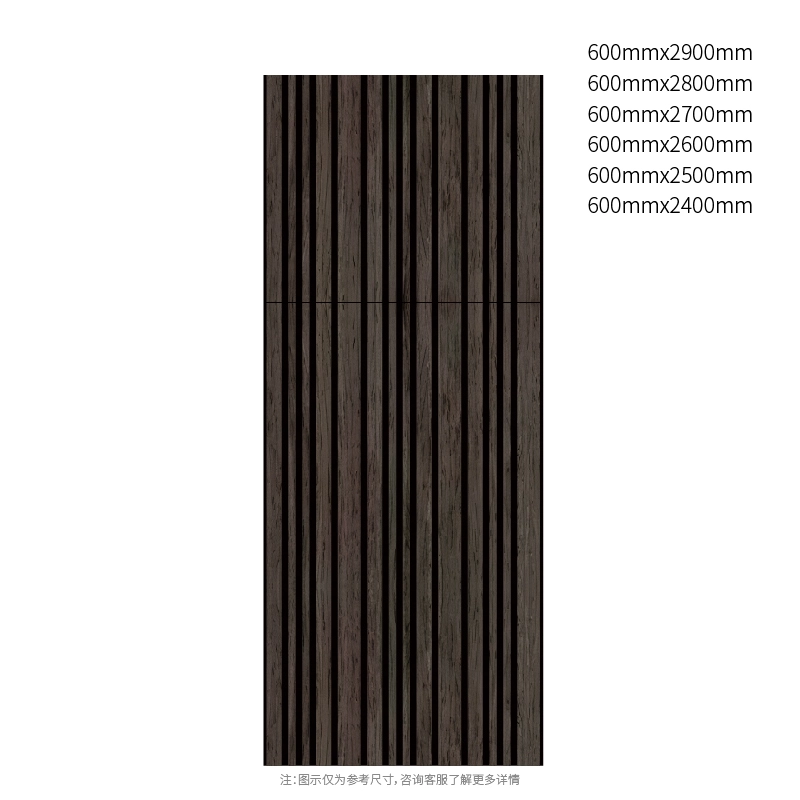
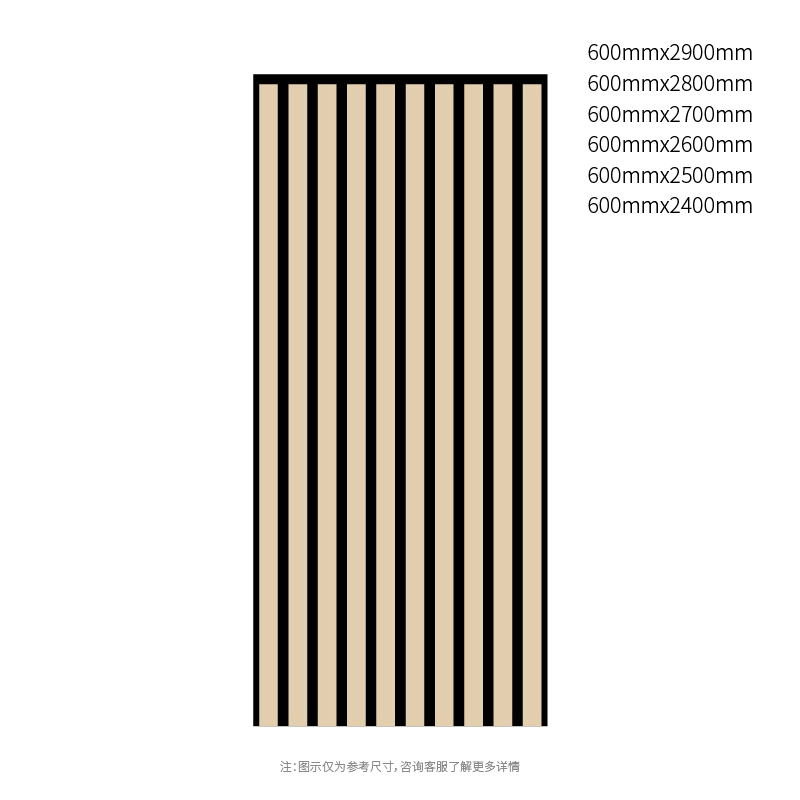
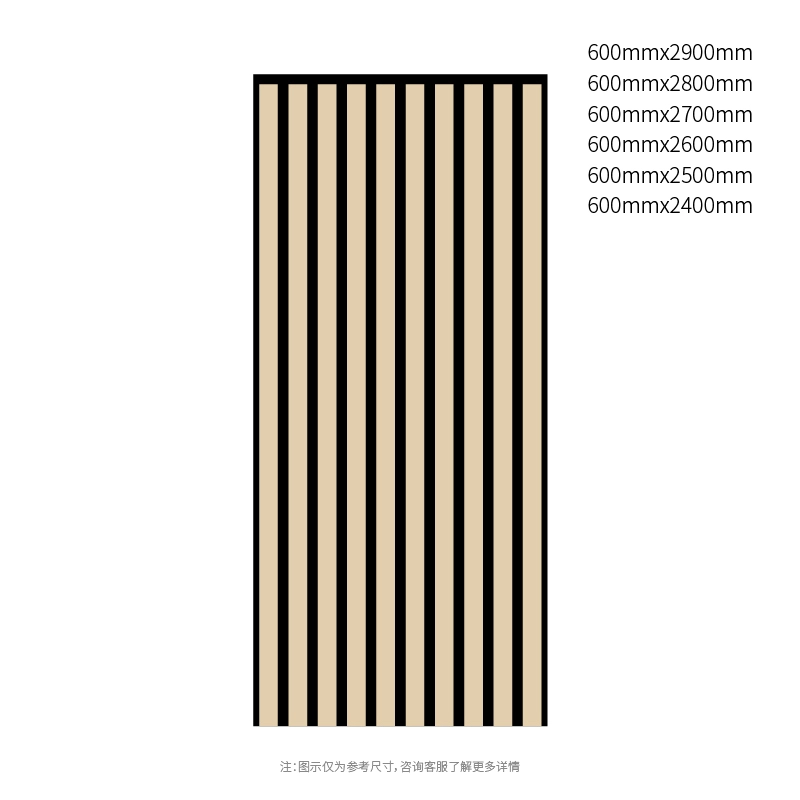
Linear Wood Slat PET Acoustic Wall Panel is a decorative interior wall treatment designed to combine architectural texture with acoustic functionality. Its defining feature is a series of parallel slats arranged over a polyester fiber acoustic backing. Depending on the selected product construction, the visible slats may use MDF with wood veneer, decorative film, melamine, or other specified finishes.
The linear arrangement creates a clean, structured appearance that complements modern, minimalist, Scandinavian, contemporary, and hospitality-inspired interiors. At the same time, the porous PET backing provides a surface that can absorb a portion of the sound energy reflected around an enclosed space.
Understanding the Main Components
Decorative Slats
The slats establish the visual rhythm of the wall. Their width, spacing, surface texture, and color determine the overall style and influence how the backing is exposed to incoming sound.
PET Acoustic Backing
The polyester fiber layer contains a porous structure that helps dissipate sound energy. Its thickness, density, and installation arrangement affect the acoustic performance of the finished system.
Mounting Structure
Depending on the product and substrate, panels may be installed with suitable mechanical fasteners, clips, adhesive, or a supporting batten system.
Decorative Surface
Wood-look and other available finishes allow designers to coordinate wall treatments with flooring, furniture, doors, cabinetry, and lighting schemes.
Before purchasing, buyers should confirm the exact composition of the slats and backing. Products with a similar appearance can differ considerably in material structure, durability, weight, and acoustic characteristics.
2. How Do These Panels Improve Indoor Acoustics?
Hard interior surfaces such as glass, concrete, tile, and painted plaster can reflect sound repeatedly. When too much reflected sound remains in a room, conversations may become difficult to follow, meetings may feel tiring, and background noise can make a space less comfortable.
Linear Wood Slat PET Acoustic Wall Panels address part of this problem by introducing a porous, sound-absorbing surface into the interior. Sound waves can pass through the openings between slats and reach the PET backing. As sound travels through the fiber structure, friction and other material interactions convert a portion of its acoustic energy into small amounts of heat.
Absorption Is Different from Soundproofing
This distinction is essential when evaluating acoustic products. Sound absorption primarily helps control reflections and reverberation within a room. Sound insulation, by contrast, concerns how effectively an assembly limits sound transmission from one space to another.
- Sound absorption: Helps reduce excessive reflected sound and echo inside a room.
- Speech comfort: Can improve the clarity of conversations when the room has appropriate acoustic treatment.
- Sound insulation: Depends on wall mass, airtightness, structural connections, cavities, and the complete building assembly.
Consequently, installing decorative acoustic panels alone should not be expected to block loud neighbors, eliminate traffic noise, or provide complete privacy between rooms.
What Determines Acoustic Performance?
Performance depends on several interacting factors: PET thickness and density, slat spacing, the proportion of exposed backing, mounting distance from the wall, any additional cavity insulation, and the total area treated. A panel installed directly against a wall may perform differently from the same panel installed over an air gap.
For projects with defined acoustic targets, request test reports for the exact panel configuration and mounting arrangement. The Noise Reduction Coefficient (NRC), where reported, summarizes sound absorption across specified frequencies; it does not represent sound transmission loss or guarantee a particular reduction in room noise.
3. What Are the Main Benefits of Linear Wood Slat PET Acoustic Wall Panels?
3.1 Better Control of Echo and Reverberation
In rooms dominated by reflective surfaces, excessive reverberation can interfere with speech and everyday activities. Properly selected acoustic panels introduce sound-absorbing area without requiring every wall to be covered in soft materials. Strategic placement on selected walls can help balance the room's acoustic environment.
3.2 A Refined Architectural Appearance
The vertical or horizontal slat pattern adds depth, texture, and visual order to otherwise plain walls. Wood-look finishes create warmth, while darker backing colors can emphasize the spacing between slats. These features allow acoustic treatment to become part of the interior design rather than an afterthought.
3.3 Flexible Design Coordination
Depending on the supplier's available options, buyers may be able to specify panel dimensions, slat profiles, surface finishes, and PET backing colors. This flexibility is useful for projects that require consistent materials across reception areas, meeting rooms, corridors, and other interior zones.
3.4 Practical Installation Planning
Modular panels can simplify layout planning and replacement compared with some fully integrated wall treatments. However, installation speed depends on wall condition, panel weight, cutting requirements, mounting hardware, and the experience of the installation team.
3.5 A Potentially More Resource-Conscious Material Choice
PET acoustic backing may be available with recycled polyester content. Buyers interested in material sustainability should verify the actual recycled percentage, supporting documentation, product composition, and end-of-life options rather than relying on general environmental claims.
4. Where Can These Panels Be Used?
The combination of decorative texture and acoustic functionality makes linear wood slat panels suitable for many indoor environments. The correct specification depends on the space's occupancy, cleaning requirements, exposure conditions, and acoustic objectives.
Offices and Meeting Rooms
Office environments often contain glass partitions, hard flooring, and open work areas that produce unwanted reflections. Panels placed on selected walls can contribute to a more comfortable sound environment, especially in meeting rooms, reception areas, collaborative zones, and executive offices.
Hotels and Hospitality Interiors
Hotels, lounges, and reception spaces need finishes that balance appearance with practical performance. Wood-look slats can introduce a welcoming visual element while helping manage reflected sound. Project teams should assess cleaning routines, fire requirements, and expected wear before selecting the finish.
Restaurants and Cafés
Busy dining areas can become uncomfortable when conversations, tableware, and background music combine with strong sound reflections. Acoustic wall treatments may help manage reverberation, although the overall result also depends on ceiling finishes, furniture, occupancy, and the amount of absorbing material installed.
Residential Interiors
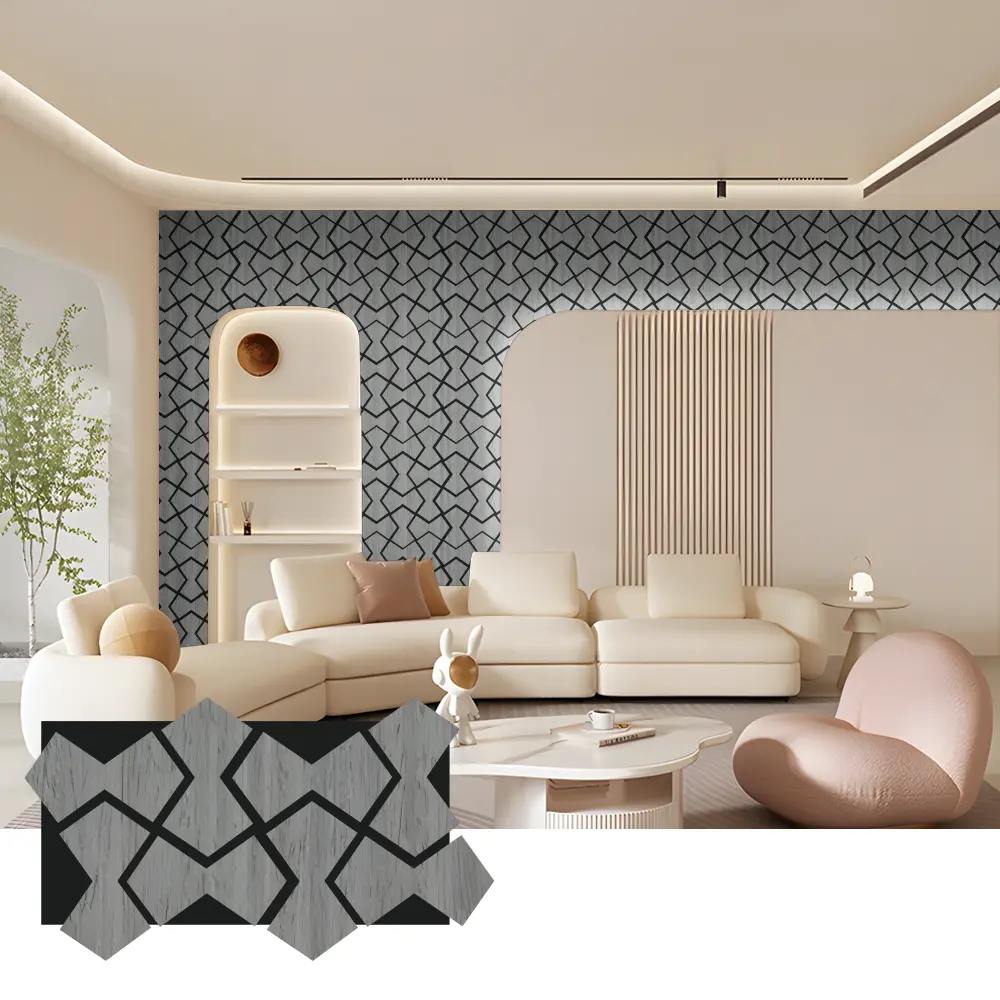
Living rooms, home offices, entertainment rooms, and bedrooms can benefit from a feature wall that combines visual warmth with acoustic absorption. Homeowners should still address doors, windows, partitions, and structural paths if the main concern is sound traveling between rooms.
Retail and Educational Spaces
Retail stores, showrooms, classrooms, and training rooms may use linear acoustic panels to create a coordinated design while supporting speech comfort. In schools and public buildings, product durability, cleanability, fire performance, and compliance with local requirements deserve particular attention.
For any application, panels should be selected for the actual indoor conditions. Areas exposed to persistent moisture, direct water contact, or demanding hygiene procedures may require a different material or a specifically tested construction.
5. How Do They Compare with Other Wall Finishes?
Different wall treatments serve different purposes. Comparing them by appearance alone can lead to an unsuitable specification. The table below provides a general guide; actual performance varies by product construction and installation.
| Wall Treatment | Visual Character | Acoustic Function | Typical Consideration |
|---|---|---|---|
| Linear wood slat PET panels | Textured, structured, wood-inspired | Can absorb reflected sound through the PET backing | Balance finish, backing, spacing, and mounting design |
| Flat PET acoustic panels | Simple, contemporary, often fabric-like | Sound absorption through a porous fiber surface | Useful when a clean, uninterrupted appearance is preferred |
| Decorative PVC wall panels | Broad range of patterns and colors | Usually not primarily designed for sound absorption | Check whether acoustic performance is documented |
| Painted plaster or drywall | Smooth and visually understated | Generally reflective without additional acoustic treatment | May require separate absorption measures in noisy rooms |
| Fabric-wrapped acoustic panels | Soft, fabric-covered appearance | Can provide substantial absorption depending on construction | Confirm fabric durability, cleaning, and fire requirements |
Linear wood slat PET panels are particularly attractive when a project needs a decorative feature wall and improved room acoustics in one coordinated system. They are not automatically the best choice for every space. A plain PET panel may be more suitable when visual simplicity or broad coverage is the priority, while a specialist sound-insulating assembly may be necessary when transmission between rooms is the primary concern.
6. How Should Buyers Select the Right Panels?
Successful purchasing starts with the project requirements rather than a finish photograph. Architects, contractors, importers, and distributors should evaluate the following points before confirming an order.
Define the Acoustic Objective
Determine whether the main concern is echo, speech intelligibility, general reverberation, or sound transmission between spaces. Where performance targets are specified, request relevant laboratory test results and confirm that the tested construction matches the proposed installation.
Confirm Materials and Dimensions
Check the slat substrate, decorative finish, PET backing thickness, overall panel thickness, panel width and length, and edge treatment. Verify tolerances and whether the panels can be cut without compromising the appearance or stability of the finished installation.
Review Safety and Indoor Requirements
Fire classifications, formaldehyde emissions, VOC-related requirements, and other compliance criteria vary by destination market and building type. Request current reports or certificates that identify the applicable model, material composition, test method, and issuing organization.
Evaluate Finish Consistency
Wood-look finishes can vary in grain, tone, and surface texture. For large projects, ask for samples and agree on acceptable color variation. Confirm whether panels from separate production batches will be visually consistent enough for continuous wall installations.
Calculate Total Project Cost
The purchase price is only one part of the budget. Include accessories, substrate preparation, labor, cutting waste, protective packaging, freight, import charges, and any additional acoustic materials needed to meet the design target.
| Evaluation Item | Questions to Ask |
|---|---|
| Acoustic performance | Are test reports available for the proposed mounting configuration? |
| Material composition | What materials are used for the slats, finish, and PET backing? |
| Customization | Can the dimensions, colors, profiles, and surface finishes be adjusted? |
| Compliance | Do the supplied documents meet the destination market's requirements? |
| Logistics | What are the minimum order quantity, lead time, packaging, and shipping terms? |
| Quality assurance | How are dimensions, finish consistency, and product defects inspected? |
7. What Should You Know About Installation?
Even a well-selected panel can produce disappointing results if the wall is poorly prepared or the slats are misaligned. Installation should follow the manufacturer's instructions and the approved project drawings.
Step 1: Measure and Plan
Measure the wall height and width, locate doors and windows, and identify electrical outlets, switches, corners, and other obstructions. Calculate panel quantities while allowing for cutting waste and any special finishing pieces.
Step 2: Prepare the Substrate
The wall should be sufficiently sound, clean, dry, and suitable for the chosen fixing method. Repair uneven areas where necessary. Confirm that the substrate can support the panel assembly and that any moisture issue has been resolved before installation.
Step 3: Establish Alignment
Mark level or plumb reference lines before fixing the first panel. Small alignment errors can become obvious across a long wall because the parallel slats create strong visual lines. Dry-fitting panels can help verify joint placement and pattern continuity.
Step 4: Use the Correct Fixing Method
Mechanical fixings, clips, adhesive, or battens may be suitable depending on the product, substrate, panel weight, and installation location. Do not assume that one method works for every wall or ceiling. Overhead installation requires particular attention to structural support and approved fixing details.
Step 5: Inspect the Finished Surface
Check panel joints, slat alignment, finish consistency, exposed edges, and the security of the installation. Where an air cavity or additional insulation is part of the acoustic design, verify that the assembly matches the intended specification.
8. How Can You Maintain Their Appearance?
Routine maintenance helps preserve both the decorative surface and the functional condition of Linear Wood Slat PET Acoustic Wall Panels. The correct procedure depends on whether the slats have a veneer, laminate, film, painted finish, or another surface treatment.
- Remove dust regularly: Use a soft brush or a vacuum attachment suitable for delicate surfaces to clean the spaces between slats.
- Clean visible marks carefully: Follow the finish manufacturer's instructions and test any cleaning method on an inconspicuous area first.
- Avoid excessive moisture: Do not saturate the PET backing or exposed substrate unless the product is specifically designed for that treatment.
- Protect the surface: Avoid abrasive pads, harsh chemicals, and cleaning tools that may scratch, discolor, or loosen the finish.
- Inspect periodically: Look for loose fixings, damaged edges, discoloration, or signs of moisture and address issues promptly.
For hotels, offices, retail premises, and other high-traffic environments, a written maintenance schedule can help facility teams apply consistent procedures. If a panel is damaged, consult the supplier about whether an individual section can be replaced without disturbing the surrounding installation.
9. Why Does Customization Matter for B2B Projects?
Commercial interiors rarely share identical dimensions, color palettes, or technical requirements. For importers, project contractors, furniture brands, and interior material distributors, customization can make it easier to coordinate acoustic panels with a broader product offering or a specific architectural concept.
Size and Slat Configuration
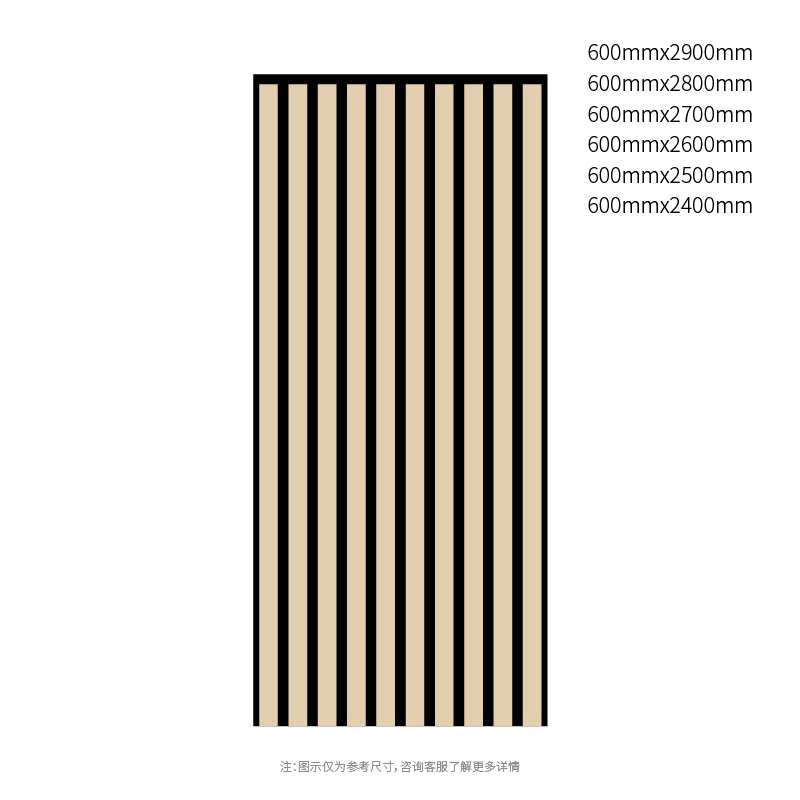
Depending on manufacturing capabilities, panel length, width, slat width, spacing, and overall thickness may be adjusted. These choices influence the visual rhythm, installation layout, material consumption, and potentially the acoustic behavior of the finished system.
Surface Finishes and Color Matching
Available finishes may include different wood tones, decorative textures, and solid colors. PET backing colors can also affect the visual contrast between the slats. Buyers should confirm the available finish range and approve physical samples when color accuracy is important.
OEM and ODM Coordination
OEM and ODM arrangements can help brands and project buyers develop products around their own specifications, packaging requirements, and market positioning. A clear technical brief should identify dimensions, material requirements, intended applications, compliance needs, inspection criteria, and expected order quantities.
Linyi Shipo Decoration Materials Co., Ltd. can be included in the sourcing discussion for buyers evaluating decorative wall panel solutions. Before finalizing a specification, request confirmation of available models, customization scope, sample arrangements, production schedules, and supporting technical documentation.
What Should a Product Inquiry Include?
- Project type and intended installation area.
- Required panel dimensions and estimated total quantity.
- Preferred slat style, decorative finish, and PET backing color.
- Applicable fire, emissions, and acoustic performance requirements.
- Destination country, packaging expectations, and delivery schedule.
- Requests for samples, technical sheets, test reports, and quotations.
Providing these details at the beginning helps suppliers assess feasibility more accurately and reduces the risk of specification changes after production planning has started.
10. Frequently Asked Questions
What is a Linear Wood Slat PET Acoustic Wall Panel made of?
It typically consists of decorative linear slats mounted over a PET polyester fiber acoustic backing. The slats may use MDF with veneer, decorative film, or other specified materials. Always confirm the actual construction of the model being purchased.
Do PET acoustic wall panels reduce echo?
They can help reduce echo and reverberation by absorbing a portion of reflected sound. The result depends on panel construction, coverage area, mounting method, room geometry, and the other surfaces in the space.
Can wood slat acoustic panels soundproof a room?
Not by themselves in most applications. These panels primarily address sound absorption within a room. Effective sound insulation generally requires an appropriately designed wall, ceiling, door, or partition assembly.
Can these panels be installed on ceilings?
Some models are suitable for ceiling applications, but not every wall panel is approved for overhead installation. Confirm the manufacturer's instructions, panel weight, structural support, and fixing requirements before proceeding.
Are PET acoustic panels environmentally friendly?
Some products incorporate recycled PET fibers and may support material-reuse or recycling objectives. Environmental claims should be checked against verified recycled-content information, product documentation, and the available end-of-life options.
Are Linear Wood Slat PET Acoustic Wall Panels fire-resistant?
Fire performance varies by backing, slat substrate, decorative finish, adhesives, and mounting assembly. Buyers should request valid test reports or certificates for the exact configuration and the applicable local standard.
Can the panel dimensions and colors be customized?
Customization may be available for dimensions, slat arrangements, surface finishes, and backing colors, depending on the supplier's capabilities and order requirements. Confirm the minimum order quantity, available options, sample process, and lead time.
How should buyers evaluate acoustic performance?
Ask for laboratory test results for the proposed panel and mounting configuration. Review the applicable sound absorption data, including NRC where available, and ensure the reported results match the project's acoustic objectives.
How do you clean linear slat acoustic panels?
Regularly remove dust with a soft brush or suitable vacuum attachment. Follow the specified cleaning instructions for the decorative surface, avoid excessive moisture, and test cleaning products in an inconspicuous area before general use.
What information is needed for a wholesale quotation?
Prepare the required dimensions, material and finish preferences, estimated quantity, destination market, compliance requirements, packaging details, and target delivery date. Technical drawings or reference images can further clarify the request.
Conclusion
Linear Wood Slat PET Acoustic Wall Panels offer a practical way to combine decorative wall design with sound absorption in modern residential, commercial, hospitality, and workplace interiors. Their linear appearance provides architectural character, while the PET backing can help manage reflected sound when the panel system is correctly selected and installed.
The best purchasing decision considers more than color and price. Material composition, acoustic test data, installation requirements, fire performance, maintenance needs, and project-specific dimensions all contribute to long-term suitability. For B2B buyers, early communication with the supplier can also simplify customization, sample approval, and project coordination.
Looking for Linear Wood Slat PET Acoustic Wall Panels?
Linyi Shipo Decoration Materials Co., Ltd. welcomes inquiries from contractors, interior designers, importers, distributors, and project buyers exploring decorative wall panel solutions. Share your project requirements to discuss suitable product options, customization possibilities, and technical documentation.
Contact us to discuss your panel specifications, request product information, and explore a solution tailored to your interior project.